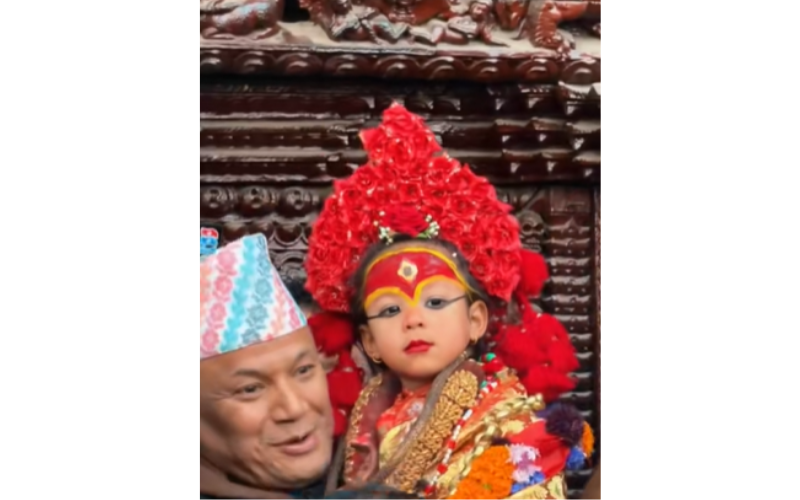
In the heart of Kathmandu Valley, a centuries-old tradition continues to captivate locals and travellers alike: the Kumari, Nepal’s Living Goddess. Revered as the earthly incarnation of Goddess Taleju Bhawani, the Kumari is not only a spiritual figure but also a living symbol of Nepalese culture, ritual, and heritage.
Who is the Kumari?
The Kumari is a young girl chosen from the Shakya caste, a Newa community in Kathmandu. Once selected, she is believed to embody divine feminine energy, acting as a protector of the city and a spiritual guide for devotees. Her presence is both sacred and symbolic, bridging centuries of Nepalese tradition.
The Rigorous Selection Process
Choosing a Royal Kumari is a meticulous process steeped in ritual and astrology:
Family and Caste: The candidate must be from the Shakya family.
Physical Perfection: She must have no scars, wounds, or missing teeth.
Astrological Alignment: Her birth chart must align with 36 specific nakshatras (constellations).
Purity and Courage: She must not have reached puberty and must demonstrate fearlessness. A famous test involves placing her in a room filled with 100 buffalo heads at night; the girl must remain calm and unafraid.
Only those who pass all these stringent tests are chosen, ensuring that the Kumari is considered a pure and fearless vessel of the goddess.
Life of the Kumari
Once selected, the Kumari resides in the Kumari Ghar in Kathmandu Durbar Square. Her life is one of devotion and ritual: she rarely leaves the palace, walks barefoot except during ceremonies, and appears in public only during festivals and special blessings. When she reaches puberty, she retires, and a new Kumari is selected, continuing the cycle of tradition.
Festivals and Public Appearances
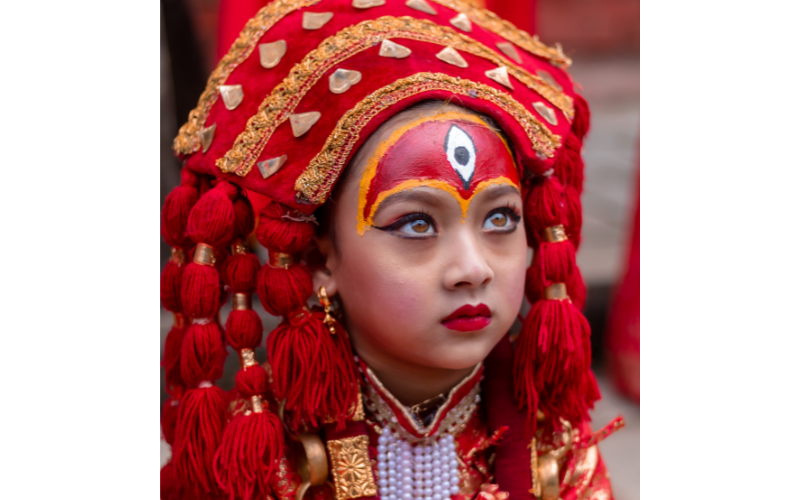
The Kumari is most visible during major festivals like Indra Jatra, where she blesses devotees from her chariot. Each appearance is considered highly auspicious, drawing crowds of devotees and travellers seeking blessings.
Cultural Significance
Beyond her spiritual role, the Kumari is a living emblem of Newa heritage, ritual artistry, and devotion. The rituals, palace, and festivals surrounding her offer travellers a unique glimpse into a living tradition that has survived for centuries, connecting the past with the present.
Visiting the Kumari
Kathmandu Durbar Square, a UNESCO World Heritage Site, houses the Kumari Ghar. Visitors can witness the Kumari during her scheduled appearances, usually at noon, when she offers blessings from the balcony. While photography is restricted, the experience is a profound encounter with Nepal’s spiritual and cultural heart.
PC: Rajesh Dhungana, Wikimedia Commons
Also Read