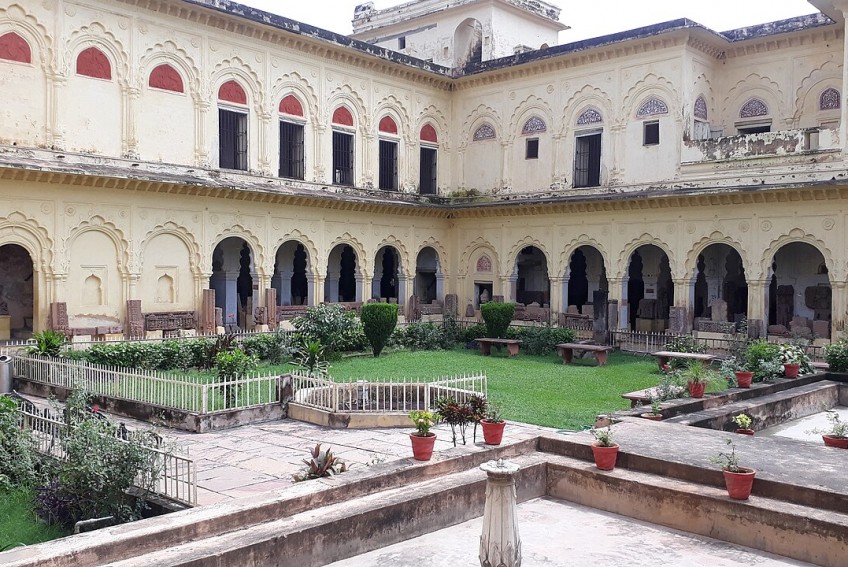
The palace sits on a rock outcrop beside the Kali Gandaki River, about 13 km from Tansen, Palpa's district headquarters. It was built in 1893 by General Khadga Shamsher Jang Bahadur Rana, in memory of his wife Tej Kumari Devi, who died the year before the origin story behind its nickname, "Taj Mahal of Nepal." The palace was abandoned in 1902 and fell into disrepair over the following century, before the government restored it in 2017 and opened it as a museum, with a new access road built along the Brangdi River.
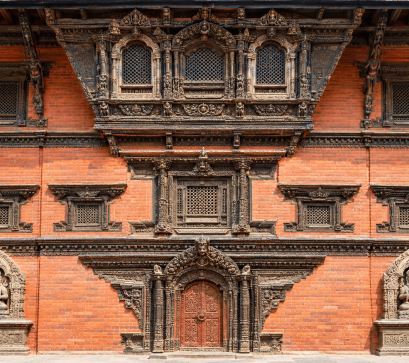
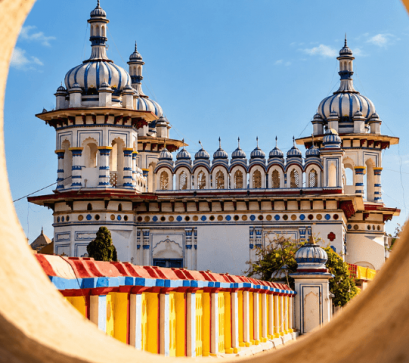
Architecturally, the palace blends Nepali, Mughal and European influences: an octagonal central structure, Newa-style wood carvings on windows and balconies, arched doorways, thick outer walls, and verandas facing the river. The 2017 restoration focused on the exterior and structure, so the interior remains largely bare visitors should expect a restored shell rather than furnished rooms or fixed exhibits. Around the palace, Rani Ban forest (named after Tej Kumari Devi) offers shaded walks and birdwatching, and the Kali Gandaki River itself is considered sacred, known for fossilised ammonites called Shaligrams.
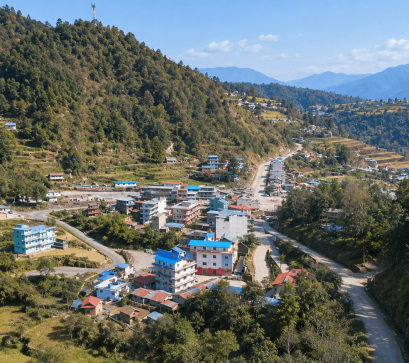
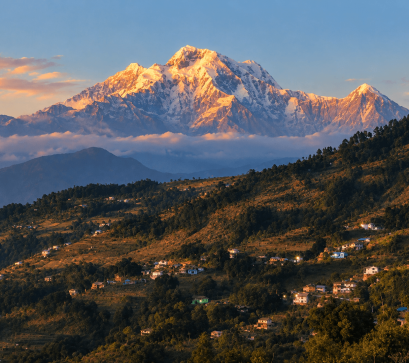
Most visitors combine the palace with time in Tansen, an old Newar hill town about 13 km away, known for its cobbled streets, the 1806 Amar Narayan Temple, and Palpali Dhaka, a handwoven textile sold in the local bazaar. Shreenagar Hill, near Tansen, adds mountain views of the Dhaulagiri and Annapurna ranges and is popular at sunrise. On-site facilities at the palace are basic: restrooms, information boards, solar-powered pathway lighting, and a QR-code self-guided tour system, though staffing is limited.
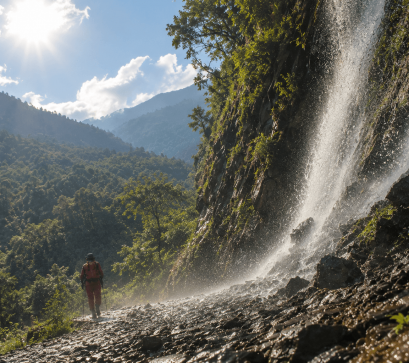
Getting there from Tansen takes about half an hour by jeep, or two to four hours on foot via a downhill trail that passes Shreenagar Hill; the return hike uphill takes longer. The road turns to gravel after Kailash Nagar, roughly 8 km from the palace, and Tansen is the last place to refuel. A local bus also runs the route, though it requires a 25-minute walk after the drop-off. Entry costs NPR 100 for Nepali citizens and NPR 500 for foreign visitors, with the site open daily from around 9 am to 5 pm.
October to early December and March to May bring the clearest skies and most comfortable hiking conditions; the monsoon months (June–August) raise the risk of landslides and slippery trails on the descent, and winter nights can turn cold. Visitors hiking down should carry cash, sturdy footwear, and water, and plan for a half-day to full-day trip depending on whether they hike, jeep, or combine the visit with Tansen.