

 Source::AP news
An ancient Roman imperial palazzo atop the city’s Palatine Hill was reopened to tourists on Thursday, nearly 50 years after its closure for restoration.
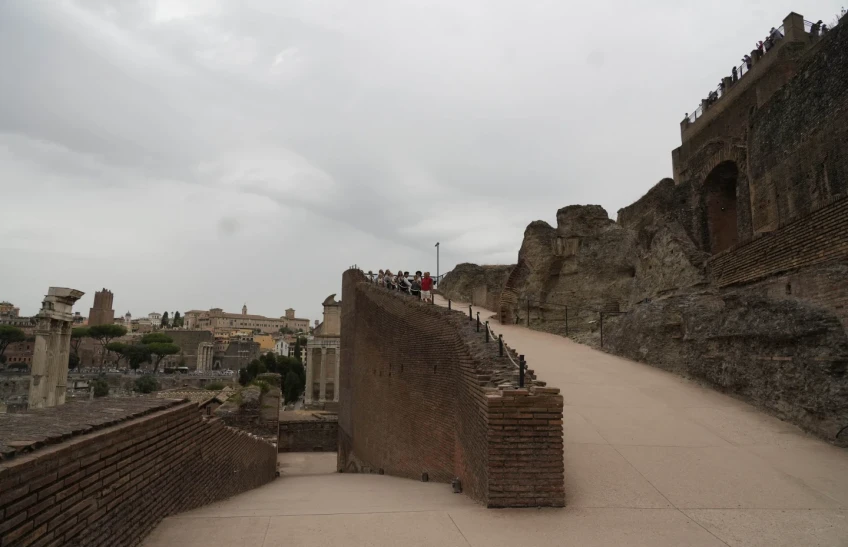
The nearly 2,000-year-old Domus Tiberiana was home to rulers in the ancient city’s Imperial period. The sprawling palace allows for sweeping views of the Roman Forum below.
The public is now able to tour it, following decades of structural restoration work to shore up the palace for safety reasons. Excavations uncovered artifacts from centuries of Roman life following the decline of the empire.
The director of the Colosseum Archeological Park, which includes the Palatine Hill, in a written description of the restored palazzo, dubbed it “the power palace par excellence.”
On the eve of the reopening, the official, Alfonsina Russo, quoted a first-century Roman poet as saying the sprawling palace seemed “infinite” and that “its grandiosity was just like the grandiosity of the sky.”
Although the Domus, or residence, is named after Tiberius, who ruled the empire after the death of Augustus, archaeological studies indicate that the palace’s foundations date from the era of Nero, shortly after the fire of 64 A.D. that devastated much of the city.
After the demise of the Roman Empire, the residence suffered centuries of abandonment until, in the 1500s, the Farnese noble family developed an extensive garden around the ruins.
Thanks to the palazzo’s reopening to the public, visitors today can get a better idea of the path ancient emperors and their courts enjoyed en route to the domus.
On the eve of the reopening, the official, Alfonsina Russo, quoted a first-century Roman poet as saying the sprawling palace seemed “infinite” and that “its grandiosity was just like the grandiosity of the sky.”
Although the Domus, or residence, is named after Tiberius, who ruled the empire after the death of Augustus, archaeological studies indicate that the palace’s foundations date from the era of Nero, shortly after the fire of 64 A.D.. which devastated much of the city.
After the demise of the Roman Empire, the residence suffered centuries of abandonment until the 1500s, the Farnese noble family developed an extensive garden around the ruins.
Thanks to the palazzo’s reopening to the public, visitors today can get a better idea of the path ancient emperors and their courts enjoyed en route to the Domus.
Also Read